
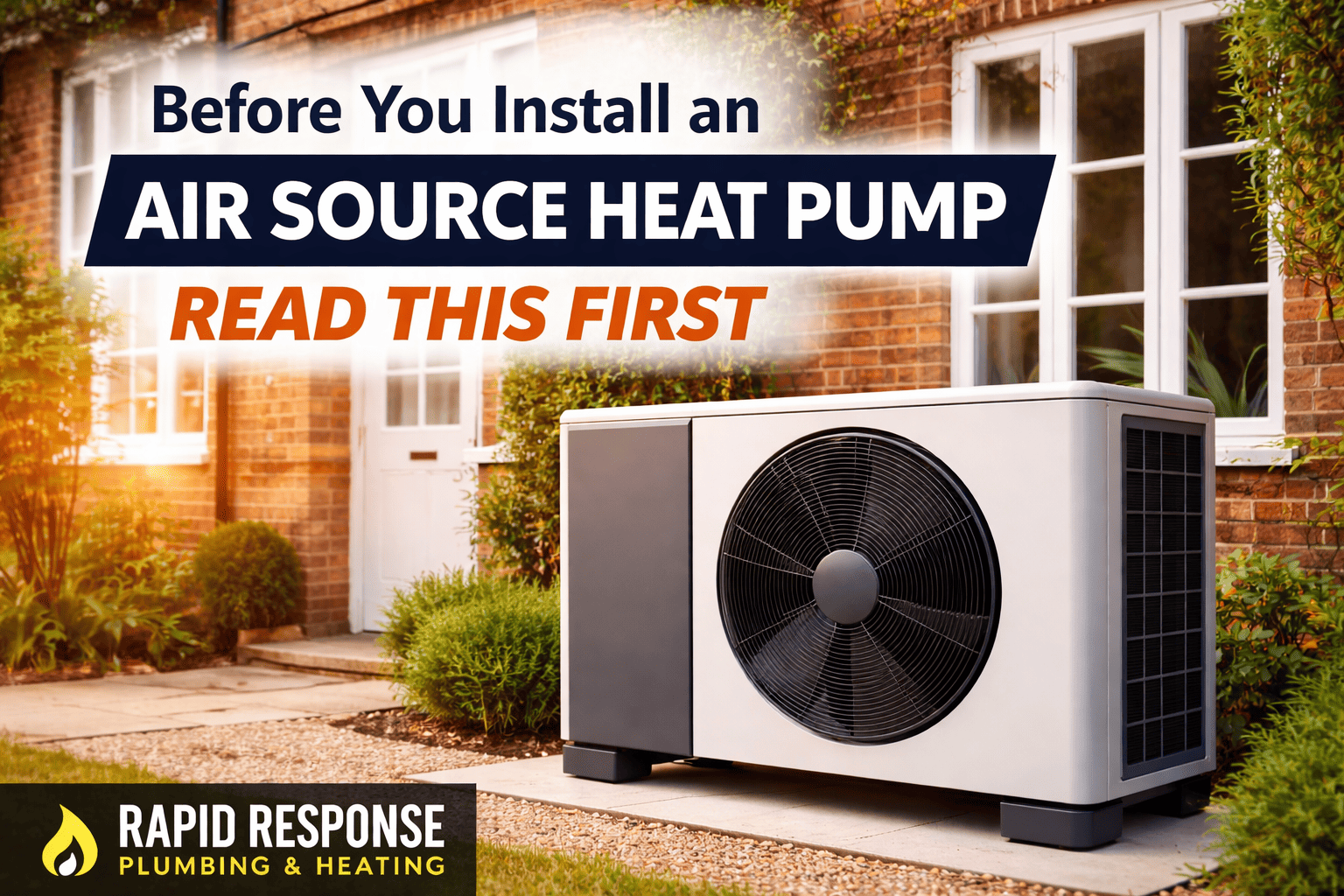
If you are considering an Air Source Heat Pump Installation in London, the decision should not start with the unit or the price. It should start with understanding whether your property, your heating habits, and your expectations actually match how a heat pump performs in real London conditions.
This guide focuses only on what truly impacts performance, comfort, and long-term value based on UK government guidance, building standards, and real-world installation outcomes.
The One Thing Most Homeowners Miss: Heat Loss Defines Everything
Before any installation, a room-by-room heat loss calculation is essential. This is not optional or technical overkill; it is the foundation of a successful system.
Why it matters:
Heat pumps are sized based on how much heat your home loses, not how big your house is.
What affects heat loss:
- Wall type (solid vs cavity in many London homes)
- Insulation levels (loft, walls, floors)
- Window type and air leakage
- Ceiling height (common in period properties)
What goes wrong without it:
- Undersized system → rooms never reach comfort temperature
- Oversized system → inefficient cycling and higher bills
👉 Expert Insight: UK standards such as MIS 3005 require proper heat loss calculations for compliant installations. If this step is skipped or rushed, the entire system design becomes unreliable.
Flow Temperature Is the Real Performance Indicator Not the Brand
Most people compare brands. Professionals focus on flow temperature.
What is flow temperature?
It is the temperature at which hot water is delivered to your radiators or underfloor system.
Why it matters:
- Heat pumps are most efficient at lower flow temperatures (35°C to 50°C)
- Traditional radiators were designed for 70°C to 80°C boilers
What this means for your home:
If your home needs high temperatures to stay warm, a heat pump will:
- Lose efficiency
- Increase electricity usage
- Deliver weaker performance
👉 Key Takeaway: A successful Air Source Heat Pump Installation in London is one where the home can be heated effectively at lower temperatures.
Emitter Design: The Most Underrated Part of Installation
“Will my radiators work?” is the wrong question.
The right question is: Can your emitters deliver enough heat at lower temperatures?
In practice:
- Many London homes require larger radiators or double panel upgrades
- Some may benefit from low temperature radiators or underfloor heating
What professionals calculate:
- Output required per room
- Radiator performance at reduced temperatures
👉 Expert Insight: This is where many installations fail not because of the heat pump, but because the heat delivery system was never redesigned.
Electrical Capacity: A Hidden Constraint in London Homes
Unlike gas boilers, heat pumps rely entirely on electricity.
What needs to be checked:
- Existing electrical supply capacity
- Consumer unit condition
- Space for additional breakers
In some cases:
- Upgrades from the Distribution Network Operator (DNO) may be required
- Older properties may need electrical improvements
👉 Key Takeaway: Ignoring electrical readiness can delay or complicate your installation.
Defrost Cycles and Winter Performance in London
London winters are moderate, but the humidity is relatively high. This directly affects heat pump behavior.
What happens in winter:
- Moisture in the air freezes on the outdoor unit
- The system enters a defrost cycle to maintain performance
What you should know:
- Temporary drop in heating output is normal
- Proper system sizing accounts for this
- Poor installations struggle during these cycles
👉 Expert Insight: Government backed performance data shows that well designed systems maintain efficiency even in UK winter conditions but only when correctly specified.
Noise Compliance Is a Technical Calculation Not Guesswork
Noise is not just about “quiet models.” It is regulated under UK planning rules.
Installers must consider:
- Sound power level (from manufacturer data)
- Distance to neighbouring windows
- Reflection from walls and surfaces
Why this matters in London:
- Properties are close together
- Failing noise limits can lead to planning issues
👉 Key Takeaway: Proper acoustic assessment is part of professional Air Source Heat Pump Services, not an optional extra.
Running Costs: The Role of SCOP, Not Just Electricity Prices
Instead of asking “how much will it cost to run,” focus on SCOP (Seasonal Coefficient of Performance).
What SCOP means:
- It measures how efficiently the system performs over a year
- Example: SCOP of 3 = 1 unit of electricity produces 3 units of heat
What affects SCOP:
- Flow temperature
- Insulation quality
- System design
- Installation quality
👉 Expert Insight: UK field data shows that poorly designed systems can drop below expected efficiency, even if the equipment itself is high quality.
Government Support: What Actually Matters
The UK government supports low carbon heating through the Boiler Upgrade Scheme (BUS).
Key points:
- Grants are available for eligible properties in England
- Installation must be carried out by MCS certified installers
- System design must meet strict standards
👉 Important: The grant supports installation, but it does not guarantee performance. Design quality still determines results.
A Real World Checklist Before You Proceed
Use this before committing to any Air Source Heat Pump Installation in London:
Property Readiness
- ✔ Adequate insulation in loft and walls
- ✔ Minimal draughts and air leakage
System Design
- ✔ Full room by room heat loss calculation
- ✔ Radiator or emitter assessment completed
Technical Checks
- ✔ Electrical capacity reviewed
- ✔ Outdoor unit placement planned
Installer Quality
- ✔ MCS certification confirmed
- ✔ Detailed design proposal provided
Final Thoughts: The System Is Only as Good as the Design
Air source heat pumps are not plug and play replacements for boilers. They are designed systems that depend on how well your home, heating distribution, and usage patterns align.
When installed correctly, based on UK standards and proper calculations, they can deliver:
- Stable indoor comfort
- Predictable energy performance
- Lower carbon impact
But when rushed or poorly specified, the same system can underperform.
Need a Proper Assessment for Your London Property?
If you are at the decision stage and want clarity before committing, it is always better to evaluate your home properly first.
For practical guidance on Air Source Heat Pump Services and real assessments:
📞 07888078885
🌐 www.rapidheat247.co.uk
Getting the design right at the beginning is what determines whether your system performs well for years or becomes a costly compromise.
FAQS:
1. How can I quickly tell if my home is heat pump ready?
If your home stays warm without needing very hot radiators, it is a good sign. If rooms cool down quickly, insulation improvements may be needed first.
2. Why do some heat pumps fail to heat homes properly?
Most issues come from poor design not the system. Common causes are wrong sizing, no heat loss calculation, or using small radiators with low temperature heating.
3. Will I feel a difference compared to my current boiler?
Yes. Heat pumps give steady warmth over time instead of quick bursts of heat. Rooms stay consistent rather than heating up and cooling down.
4. Can I keep my existing radiators without upgrades?
Only if they can deliver enough heat at lower temperatures. Many London homes need at least partial radiator upgrades for proper performance.
5. What makes running costs go up unexpectedly?
Higher costs usually happen when:
- The system runs at high temperatures
- Insulation is poor
- The system is incorrectly sized
6. Where is the biggest installation mistake homeowners make?
Rushing into installation without a full home assessment. Skipping design checks often leads to comfort and efficiency problems later.