There’s a specific kind of dread that comes with a boiler acting up. It’s not the leak-through-the-ceiling kind. It’s quieter than that. You’re standing over it at 9pm, wondering if this is a five-minute fix, a proper repair job, or the start of a conversation about buying a whole new boiler. Most people freeze at exactly this point. Not because the problem is complicated, but because nobody’s ever actually explained how to tell the difference.
That’s what this guide is for. It’s not another list of fault codes, and it’s not a “top signs your boiler needs replacing” article that tells you everything and nothing. It’s a straightforward way to work out, right now, whether you’re looking at an emergency repair, a scheduled fix, an annual check that would have prevented this, or genuinely time to replace the thing.
Why This Question Trips People Up
Boilers rarely fail cleanly. A boiler that loses pressure once a month isn’t broken exactly, but it isn’t fine either. A ten-year-old boiler that needs a new pump isn’t automatically due for replacement, though it’s not nothing. Many homeowners panic and call for emergency boiler repair in London over something that could have waited a week. Others ignore a genuine warning sign because last time it “sorted itself out.”
Three things actually decide the right path here: how urgent the symptom is, how old the boiler is, and how often this particular problem has happened before. Once you have those three answers, the decision usually makes itself.
Step One: Is This Actually an Emergency?
Start here, because if the answer is yes, nothing else matters yet.
Treat it as a genuine emergency if you smell gas, if there’s a water leak you can’t contain, or if the boiler has shut down completely with no heating or hot water in cold weather. Scorch marks, soot, or a pilot light burning yellow or orange instead of blue are also warning signs. Any of these call for a same-day, ideally same-hour, visit from a Gas Safe registered engineer. This is exactly what genuine emergency plumbing solutions in London exist for, and it’s not the moment to shop around or wait for a callback.
On the other hand, some symptoms rarely need urgent attention. An odd noise while the boiler keeps running, hot water that’s a little slower than usual, a small pressure drop that a quick top-up fixes, or one cold radiator while the rest of the house heats fine, these are real problems worth booking in. They just don’t justify an out-of-hours premium.
Step Two: If It’s Not an Emergency, Is It Worth Repairing?
Age and history matter here more than the specific fault does.
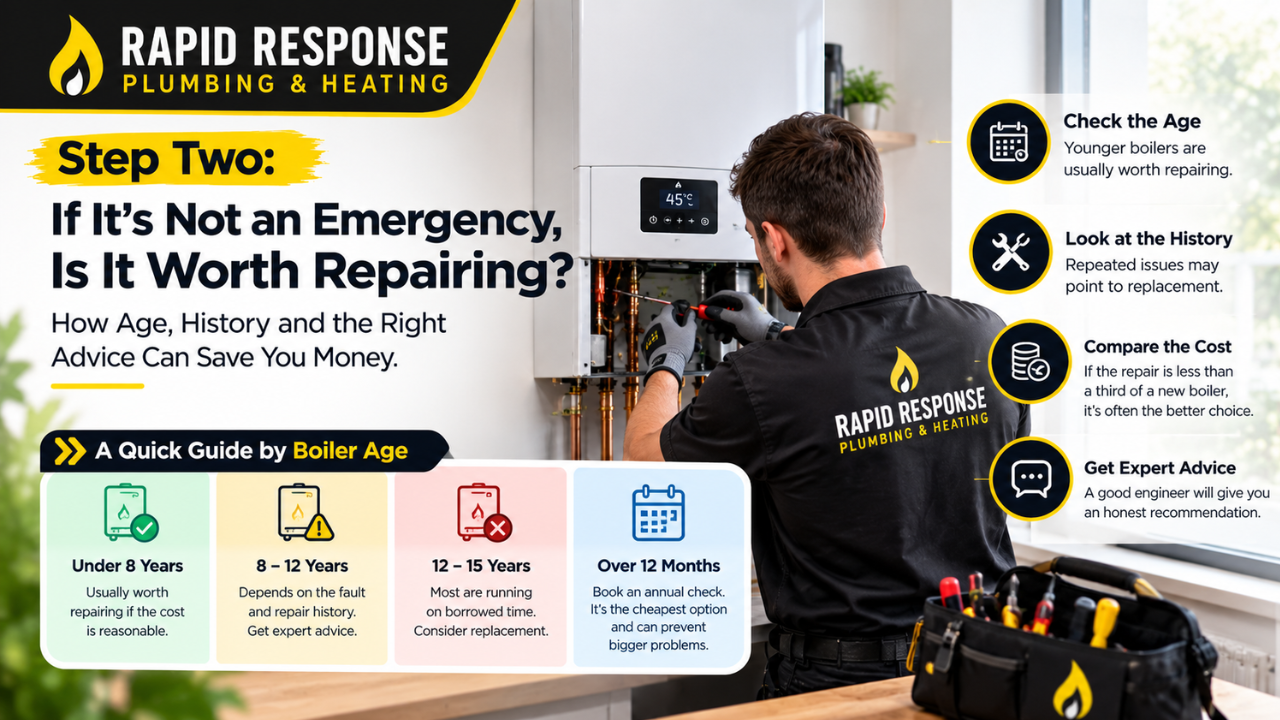
Most engineers work from a rough rule: repair a boiler under 8 years old if it has a clean-ish service history and the repair costs under roughly a third of a new installation. Parts are usually still available, the labour is straightforward, and there’s no financial case for replacing something with years of life left.
Between 8 and 12 years old, it becomes a genuine judgement call. A second or third repair within 18 months, or a major part failing (heat exchanger, main PCB), changes the maths. Ask whoever’s fixing it for a straight answer on whether you’ll likely be back here again within six months. A good engineer will tell you honestly rather than patch it and move on.
Past 12 to 15 years, most boilers are running on borrowed time even while they’re still working. Efficiency has usually dropped by this stage too, so part of what you “save” by repairing gets quietly spent back on higher gas bills. This is generally the point worth getting a proper quote for boiler installation in London alongside the repair quote, so you’re comparing like for like instead of guessing.
Step Three: Would Regular Maintenance Have Caught This?
Here’s the part few people want to hear, but it’s the honest one: plenty of emergency call-outs trace back to something a routine service would have caught, and fixed cheaply. Slow pressure loss, a sticking valve, early corrosion inside a heat exchanger, these usually show up during an annual check long before they turn into a Saturday-night emergency.
Annual boiler maintenance in London typically costs a fraction of a single emergency call-out fee. It also does two things an emergency repair never can. It catches problems while they’re still small, and it keeps your manufacturer’s warranty valid, since most warranties require proof of annual servicing. If you’re dealing with a boiler issue right now and can’t remember the last service date, factor that into your decision. Fixing today’s problem without booking a service afterwards just sets up the next one.
A Quick Way to Put It All Together
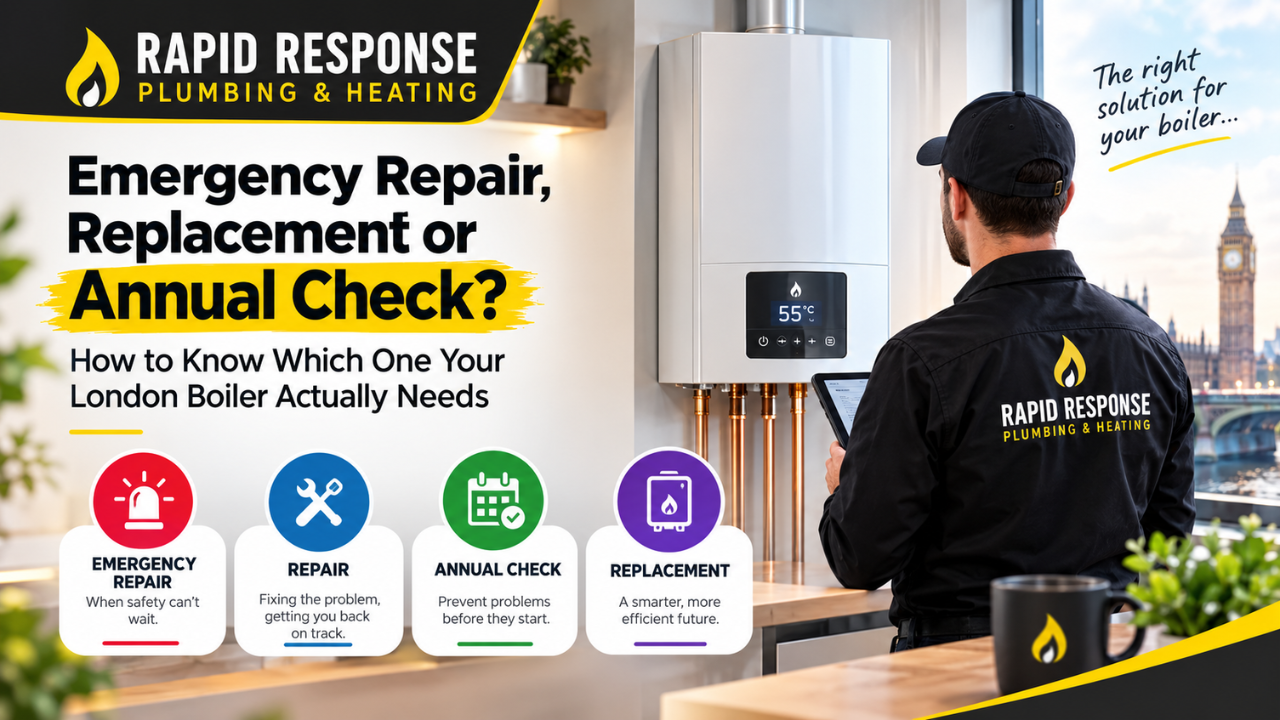
An immediate safety risk (gas smell, active leak, total breakdown in cold weather) means an emergency repair, full stop.
A working but flawed boiler under 8 years old usually just needs a standard repair, booked at a normal rate rather than an emergency one.
An 8 to 15 year old boiler with a history of repeat problems deserves a genuine repair-versus-replace conversation, ideally with an engineer who isn’t pushing you toward either option for their own benefit.
More than 12 months since anyone looked at the boiler, working or not, points to an annual check. It’s also the cheapest of these four options by a wide margin.
What We Actually Do When You Call
Whether you’re calling about an emergency, a repair quote, or booking a service, our engineers start by asking about the boiler’s age, its service history, and exactly what it’s doing. That’s not small talk. It’s how we avoid charging you for an emergency call-out when a scheduled repair would do, and equally, how we avoid patching up something that genuinely needs replacing.
Every engineer on our team is Gas Safe registered, and we give fixed, upfront pricing before any work starts, whether that’s an emergency visit, a repair, a service, or a full installation quote. Tell us what’s happening if you’re unsure which of these applies, and we’ll give you an honest answer, even if that means saying “this can wait until Tuesday” instead of pushing an emergency booking you don’t need.
Call 07888078885 if something’s wrong with your boiler right now, or if you just want an honest read on whether it’s worth fixing again. Our plumbing services page covers everything we handle, and our homepage has the full range of heating and boiler work we do across London.
Frequently Asked Questions
Treat it as an emergency if there’s a gas smell, an active water leak, total loss of heating and hot water in cold weather, or unusual scorch marks or flame colour. Call a Gas Safe engineer immediately in these cases. Minor noise, reduced pressure, or one cool radiator can usually wait for a scheduled visit.
It depends on the fault and the repair history. A single, minor repair on a well-maintained 10 to 12 year old boiler is often still worth doing. Repeated repairs within the last year or two, or a major component failure, usually tip the balance toward replacement.
Annual maintenance is typically a small, fixed fee. Emergency call-outs carry a higher rate because of the urgency and often the out-of-hours timing. Regular servicing almost always works out cheaper over the life of the boiler.
In most cases, yes. Manufacturer warranties usually require proof of an annual service to stay valid. Skip it, and you could end up paying full price for a repair that should have been covered.
Yes, and it’s worth asking for exactly that. A good engineer assesses the fault, the boiler’s age, and its history, then gives you an honest recommendation rather than defaulting to whichever option pays them more.