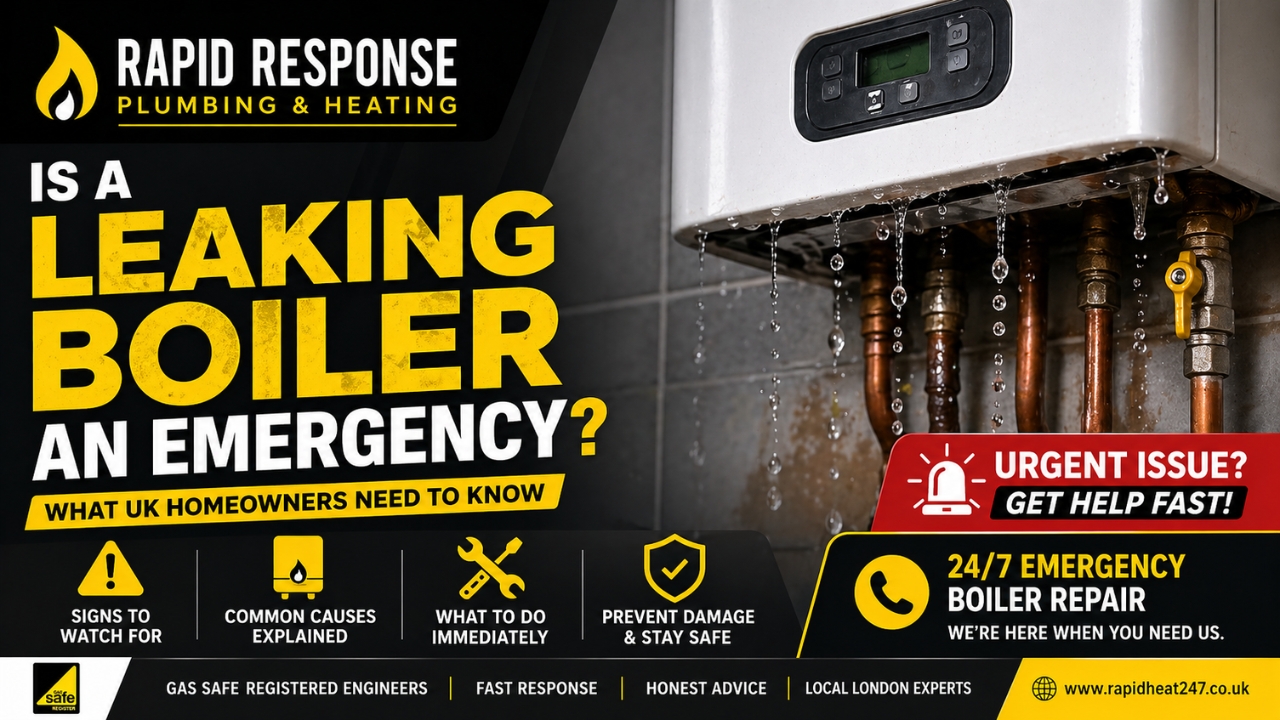
A leaking boiler is something most homeowners don’t think about until they suddenly spot water pooling underneath it. At first, it might look harmless with a small drip, maybe just condensation or a loose pipe. But in reality, a boiler is a sealed system, and any leak is a sign that something isn’t working properly.
In many UK homes, especially during colder months, your boiler is essential for both heating and hot water. So, when it starts leaking, the real question is not just “is it serious?” but “how quickly can this turn into a bigger problem?”
The truth is simple:
A leaking boiler can range from a minor issue to a full emergency depending on the cause. But one thing is certain it should never be ignored.
This guide will help you understand whether a leaking boiler is an emergency, what causes it, and exactly what steps you should take to stay safe and avoid costly repairs.
Is a Leaking Boiler an Emergency?
In the UK, a leaking boiler is considered an emergency if it:
- Causes a sudden drop in pressure
- Affects electrical components
- Stops your heating or hot water
- Produces unusual noises like banging or hissing
- Leaks heavily or spreads quickly
Even if your boiler is still working, a leak is a warning sign that requires urgent inspection by a Gas Safe engineer.
How to Tell If Your Boiler Leak Is Serious
Not all leaks look dramatic at first. Some start small and get worse over time. Knowing the difference between urgent and critical can help you act quickly.
Signs You Need Emergency Boiler Repair
Call for emergency boiler repair in London or your local area immediately if you notice:
- Water leaking near electrical wiring or components
- Boiler pressure dropping below 1 bar repeatedly
- Heating or hot water suddenly stops working
- Loud noises like kettling, banging, or hissing
- Water leaking from inside the boiler casing
- A fast or continuous leak
These signs usually point to internal damage or system failure, which can become dangerous if left untreated.
Less Urgent But Still Important
Some leaks may seem minor, but they still need quick attention:
- Slow dripping from a pipe or valve
- Small puddle forming under the boiler
- Occasional pressure loss
- Damp patches around fittings
These issues often develop into bigger problems, so it’s best to fix them early before they lead to complete boiler breakdown.
Common Causes of a Leaking Boiler in UK Homes
Understanding the cause helps you explain the issue clearly to an engineer and avoid future problems.
1. High Boiler Pressure
One of the most common reasons for a boiler leaking water is excessive pressure. When the pressure gets too high, the system releases water through the pressure relief valve.
2. Faulty Pressure Relief Valve (PRV)
If the valve becomes worn or damaged, it may continue to leak even when pressure levels are normal.
3. Corroded Heat Exchanger
This is a serious issue and often occurs in older boilers. Corrosion can cause cracks, leading to internal leaks.
In many cases, this results in a repair vs replacement decision.
4. Worn Seals and Loose Joints
Over time, seals inside the boiler can degrade, especially in systems that haven’t been serviced regularly.
5. Sludge Build Up in the System
Dirty water and debris inside the system can block pipes, increase pressure, and damage internal components.
Why Ignoring a Boiler Leak Can Cost You More
Many homeowners delay calling an engineer, thinking the leak is minor. Unfortunately, this often leads to bigger issues such as:
- Complete loss of heating and hot water
- Expensive repairs or full boiler replacement
- Water damage to floors, walls, and ceilings
- Mould and damp problems
- Increased energy bills due to inefficiency
In cities like London, where homes are often closely connected, even a small leak can affect neighbouring properties or flats.
What To Do If Your Boiler Is Leaking
If you discover your boiler leaking water, follow these steps immediately:
1. Turn Off the Boiler
Switch off your boiler to prevent further damage. This helps protect internal components and reduces risk.
2. Check the Pressure Gauge
If the pressure is dropping or unstable, avoid using the system until it’s repaired.
3. Contain the Leak
Place a bucket or towel under the leak to minimise water damage.
4. Do Not Attempt DIY Repairs
Boilers are complex and regulated systems in the UK. Attempting repairs yourself can be dangerous and illegal.
5. Call a Gas Safe Engineer
Only a certified engineer can safely inspect and repair your boiler.
Can You Still Use a Leaking Boiler?
This is one of the most common questions.
The answer is no, you should not use a leaking boiler.
Even if it seems to be working:
- Internal components may already be damaged
- The leak could worsen suddenly
- There’s a risk of electrical faults
- The system could fail completely at any time
Switching it off and arranging repair is always the safest option.
Repair or Replace: What’s the Right Choice?
Whether you should repair or replace your boiler depends on several factors:
- Age of the boiler
- Type and location of the leak
- Cost of repair vs replacement
- Overall system condition
General Rule:
- Small external leaks → usually repairable
- Internal or major component leaks → replacement may be more cost effective
- Boilers over 10 years old → often better to upgrade
A professional diagnosis is the best way to make the right decision.
How to Prevent Boiler Leaks in the Future
Preventing a leak is much easier and cheaper than fixing one.
Here’s what works:
- Schedule annual boiler servicing
- Keep pressure between 1 and 1.5 bar
- Fix small issues early
- Use qualified engineers for installation
- Consider system cleaning (powerflush) if your system is old
Regular maintenance helps detect hidden issues before they become emergencies.
Why Fast Action Matters in the UK
In the UK, boilers are used heavily during colder months, which increases wear and tear. Delaying repairs can leave you without heating when you need it most.
Also, due to building structures and weather conditions, leaks can quickly lead to damp and structural damage, making early action essential.
Need Emergency Boiler Repair in London?
If your boiler is leaking and you need fast help, Rapid Heat 247 offers reliable and quick solutions.
- Gas Safe registered engineers
- Same day response
- Honest advice with no unnecessary upselling
📞 Call now 07888078885 for immediate support
🌐 https://www.rapidheat247.co.uk
Frequently Asked Questions
A leaking boiler should always be treated urgently. It becomes an emergency if the leak causes pressure loss, affects electrical components, or stops heating and hot water. Even a small leak should be checked within 24 hours to prevent further damage.
A boiler leaking from underneath usually indicates an internal issue such as a faulty pressure relief valve, worn seals, or corrosion inside the system. This type of leak often requires professional inspection as it is not just a surface level problem.
Ignoring a leaking boiler can lead to serious issues including complete boiler breakdown, water damage to your property, and higher repair costs. In many cases, a small leak turns into a major fault if left untreated.
Yes, you should switch off your boiler immediately if you notice a leak. This helps prevent further internal damage and reduces safety risks until a qualified engineer can inspect the system.
This usually happens due to internal leaks, a faulty pressure relief valve, or expansion vessel issues. If you frequently need to top up the pressure, it’s a clear sign your boiler requires professional repair.
You should contact a Gas Safe registered engineer such as Rapid Heat 247. They are qualified to safely diagnose and fix boiler leaks in compliance with UK regulations.