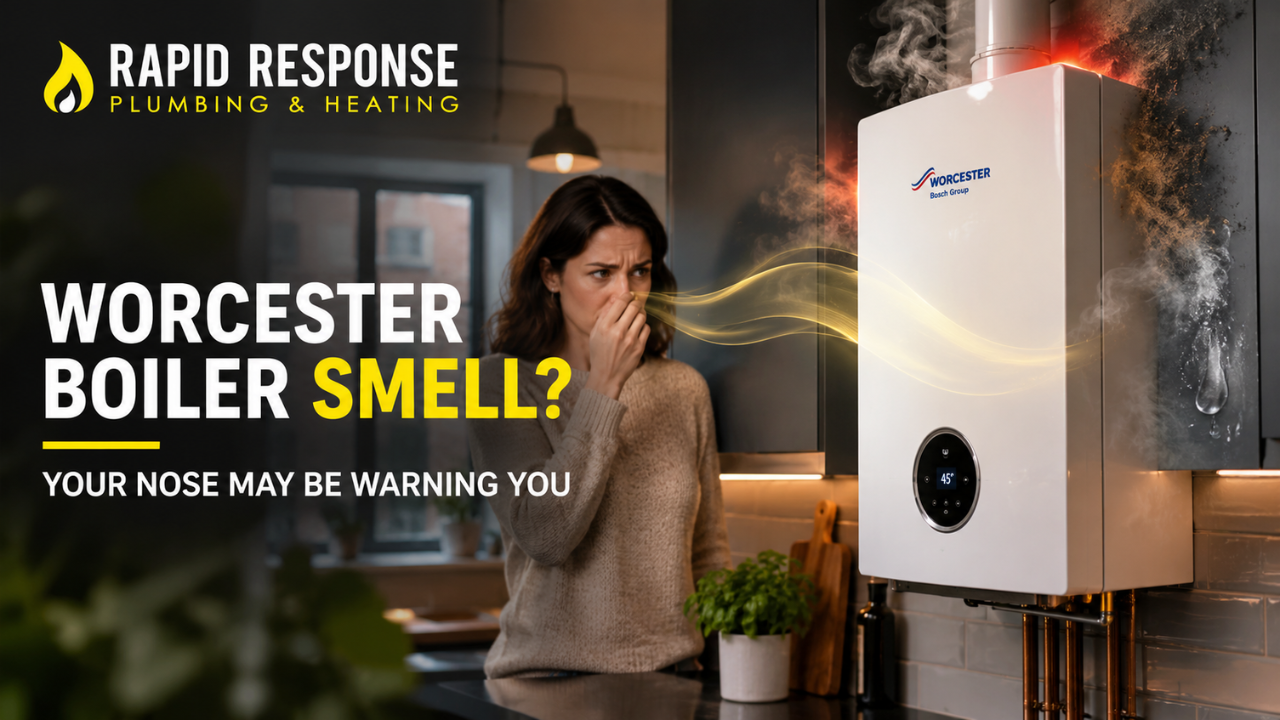
Picture the scene. You are back from work, the heating has just clicked on for the evening and a strange whiff drifts across the kitchen. It might be sharp, musty or faintly like burnt toast. You sniff again, shrug and carry on with dinner.
That shrug is exactly what we would like you to avoid. A Worcester Bosch boiler smell is rarely random. Sometimes it is a harmless autumn quirk, and sometimes it is the earliest sign of a fault that deserves attention today. After 8 years of repairing and servicing boilers around London, the team at Rapid Response Plumbing and Heating has learned that most odours fall into a handful of familiar groups. Here is how to tell which group yours belongs to.
Smell Like Rotten Eggs? Stop Reading and Act
Natural gas has no scent of its own, so suppliers add a strong sulphur smell that most people compare to rotten eggs. If that is what you can smell near your boiler, kitchen or meter, the priority is getting yourself and your household away from it.
- Do not touch switches, plugs or anything that could make a spark, and keep naked flames well away.
- Let fresh air through the property by opening up whatever windows and doors you can reach quickly.
- If the gas supply valve at the meter is easy to get to, turn it off.
- Walk everyone outside, pets included.
- Phone the free 24 hour National Gas Emergency Service on 0800 111 999 from a safe spot away from the building.
- Stay out until a professional confirms it is safe to return.
Do not go hunting for the source. Once the emergency is dealt with, ask a Gas Safe registered engineer to inspect the boiler and pipework before anyone switches it on again.
The Everyday Odours, Decoded
Not every unusual scent is a crisis. Here are the usual suspects and how seriously to take each one.
The Autumn Toast Smell
After a long summer of doing nothing, a boiler collects a fine layer of dust. The first proper heating cycle cooks that dust, which creates a warm, slightly scorched smell. It is very common on the first cold evenings.
Your move: Let some fresh air in and keep an eye on it. A harmless dust smell fades fast. If it hangs around, grows stronger or comes with visible smoke, turn the boiler off and book an engineer.
The Melted Plastic Warning
Anything resembling hot plastic or burning wiring is not worth waiting out. It can signal an electrical problem, an overheating part or a damaged cable inside or near the boiler.
Your move: Switch the boiler off at the fused spur and leave it alone. Call a Gas Safe engineer. If you see smoke or sparks, get everyone out and ring 999.
The Damp Cellar Whiff
A musty, earthy aroma near the boiler usually means moisture is somewhere it should not be. The cause might be a slow leak, condensation around the flue or trouble in the pipe that carries waste water away from the boiler.
Your move: Look for drips, rust marks, puddles or damp patches. Anything you find is a reason to switch off and arrange an inspection, because leaks tend to grow rather than vanish.
The Drain Impersonator
Sometimes a boiler gets blamed for a smell that is really coming from the drain it connects to. The condensate pipe often ends in a waste pipe or gully, and if the connection is poor or the trap has dried out, drain odours can drift back.
Your move: Work out whether the smell is strongest at the boiler or at the pipe connection. Either way, it deserves a professional look, since a blocked condensate route can also make the boiler shut itself down.
The New Boiler Aroma
A freshly installed boiler, or one that has just had a repair, can give off a faint hot metal or oily scent for its first few runs as protective residues burn away.
Your move: Ventilate and wait. If it lingers or returns, ask your engineer to re-check their work.
The Sooty Sting
A sharp, sooty or acrid smell, especially alongside black or brown marks on or around the boiler, is a serious red flag. It can point to poor combustion, which is the route to carbon monoxide.
Your move: Turn the boiler off, let fresh air in and keep it off until a Gas Safe engineer has examined it.
Your Nose Cannot Catch Carbon Monoxide
Here is the uncomfortable truth. Carbon monoxide has no smell, no colour and no taste. A house can be filling with it while smelling perfectly normal. That is why a working carbon monoxide alarm near your boiler matters more than any amount of sniffing. If you have not pressed the test button this month, do it today.
Two Minutes of Detective Work Before You Ring Anyone
A few quick observations help an engineer find the fault faster and save you time:
- When does the smell appear: at start up, constantly or only when the heating is running?
- Where is it strongest: by the boiler, near the flue, at the condensate pipe or somewhere else?
- Is anything else happening, such as odd noises, leaks, fault codes, falling pressure or marks on the casing?
- Has anything changed recently, like a service, a repair or a long period of disuse?
- Is anyone at home feeling dizzy, sick or has a headache?
If anyone feels unwell, ventilate the home and get medical advice. Whatever you find, leave the casing on. Opening a boiler is legally reserved for Gas Safe registered engineers and is genuinely dangerous for anyone else.
Worcester Boiler Repair Services in London: Finding the Real Cause
When a smell keeps returning, guesswork is the wrong approach. Our Worcester Boiler Repair Services in London focus on tracing the root cause, whether that is an ignition problem, a flue issue, a leak or a worn component. Our engineers are Gas Safe qualified and Worcester Bosch approved, so the work follows recognised standards.
Learn more on our page for Worcester Bosch boiler service engineers near me. If you live in the east of the capital, our local page on Worcester boiler repairs in Hackney covers the area where we are based.
Boiler Repair Service in London: Signs You Have Chosen Well
A good Boiler Repair Service in London feels reassuring from the first phone call. Expect the engineer to listen to your description, examine the boiler and flue carefully, explain the diagnosis in everyday language, agree the plan with you and test the boiler before leaving. Be cautious about anyone who stays vague, hurries the job or cannot tell you what went wrong. A smell is only a symptom, and your engineer should be able to name what is behind it.
Want to know more before you book? Our pricing page is a good starting point, and our contact page makes it easy to ask us a question.
Emergency Boiler Repair in London: When Waiting Is Not an Option
Sometimes the safe decision leaves you without heating. If you have shut the boiler down because of a scorched smell, sooty marks or a gas concern, you will want warmth and hot water back quickly once the property is safe.
Our Emergency Boiler Repair in London runs around the clock. We will examine the fault, talk you through the choices and carry out a safe repair so your home returns to normal as soon as possible. For more detail, see our page on emergency boiler repair in the City of London or our local service for emergency boiler repair in Hackney.
Keep the Smells Away This Winter
Most odd odours can be headed off with a little routine care:
- Book a yearly service. Our boiler maintenance visits check the flue, seals, burner and condensate route before small issues grow.
- Give the boiler space. Keep stored items away from it and leave vents clear.
- Test your alarm monthly, and swap it when it expires.
- Mention small changes early, such as a new noise, a drip or a faint scent.
For more ways to prepare your heating for the cold months, read our guide to getting your boiler winter ready.
Noticed Something Odd? Talk to a Gas Safe Engineer
Your nose is one of the best safety tools you own, so give it the benefit of the doubt. If a smell worries you, or keeps coming back, get it looked at properly.
Call Rapid Response Plumbing and Heating on 07888078885 or visit www.rapidheat247.co.uk to book your repair or safety check today.
Worcester Bosch Boiler Smell FAQs
A mild, dusty scorched smell for a short while is common. If it fades, you can relax. If it persists, strengthens or brings smoke, switch the boiler off and call an engineer.
Avoid anything that could spark, let air in, turn the supply off at the meter if you can, and go outside. Then ring 0800 111 999. Keep the boiler off until a Gas Safe engineer has checked it.
No. It is completely undetectable by smell, which is why an alarm is essential. Soot, staining or an acrid odour around the boiler can hint at poor combustion, so have it inspected promptly.
Possible reasons include a small leak, condensation or a condensate pipe issue. Check for drips and marks, then arrange an inspection, since damp can damage the boiler and its surroundings over time.
You can observe and make notes, but anything inside the casing must be left to a Gas Safe registered engineer.