
If you’ve started searching for bathroom renovation services London has to offer, chances are you’ve already read a dozen articles about tile trends, freestanding baths, and average costs. What fewer articles cover is something that genuinely affects how smoothly a London project runs: the type of property you live in, and what that means for planning the work.
London is unlike much of the rest of the UK. A large share of homes here are leasehold flats, converted Victorian and Edwardian terraces split into multiple units, or ex-local-authority blocks with shared plumbing stacks running through several floors. When your bathroom fitters in London understand this from the outset, your project tends to run far more smoothly, with fewer surprises and a clearer timeline.
This guide covers the practical questions experienced london bathroom installations specialists typically ask before they quote, so you know what to expect and can plan with confidence. It’s general guidance based on common London property types, not legal advice, so always confirm specifics with your lease, managing agent, or a qualified professional where needed.
Why London Bathrooms Often Need a Different Approach
Roughly two in three inner London homes are flats, and many of those are leasehold. That single fact shapes how a renovation should be planned compared with, say, a detached freehold house elsewhere in the country.
In a leasehold property, your bathroom plumbing very often connects into shared soil stacks and water risers that run through neighbouring flats above and below you. Moving a toilet, relocating a shower waste, or changing the position of pipework can sometimes affect parts of the building beyond your own flat, which is why some leases ask the freeholder to be informed or to give consent for certain types of work.
A reputable bathroom renovation company will usually ask about your lease and building type early in the conversation, so any necessary checks can be built into the project timeline rather than discovered partway through.
Three Things Worth Checking Early in a London Renovation
1. Your lease and any alterations clause
Many London leases include a clause about getting written consent from the freeholder before structural alterations or works affecting shared services go ahead. Cosmetic changes, such as new tiles, a repainted suite, or a new mirror cabinet, generally don’t raise any issues. Moving the position of a toilet, bath, or shower is more likely to need a quick check, simply because it can affect waste pipe routing through the building.
Practical tip: it helps to have a copy of your lease, or to check with your managing agent, before booking installation dates. A good installer will factor a short consent to check into your schedule rather than skipping it.
2. Shared pipework and party structures
In converted houses split into flats, or in semi-detached and terraced properties, plumbing work involving a shared wall, floor, or party structure can sometimes fall under additional regulations, most relevant when relocating waste pipes or altering floor structure shared with a neighbouring property. This is rarely a concern for a like-for-like refit, but it’s worth a quick conversation with your installer on larger remodels.
3. Building regulations for electrics and plumbing
Electrical work in a bathroom, such as extractor fans, shaver sockets, underfloor heating controls, or lighting, falls under building regulations covering electrical safety. Plumbing alterations affecting water systems are covered separately. Installers who are registered with the relevant competent person schemes can self-certify this work, which is a simple way to confirm you’re working with genuine, qualified professionals. It’s always worth asking to see registration before work begins.
Converted Period Properties: What Often Gets Missed
Victorian and Edwardian conversions present their own set of practical considerations. These properties were built well before multiple bathrooms were standard, so pipework was often added later, sometimes boxed into corners, run externally, or fitted in ways that don’t quite match modern standards. When renovating a bathroom in one of these flats, installers commonly find:
- Undersized waste pipes that may not suit modern showers or larger baths
- Older supply pipework that needs replacing rather than patching
- Previous joist work from earlier renovations that needs reviewing
- Ventilation routed into spaces shared with neighbouring flats, which may need an updated extraction solution
This kind of detail rarely shows up in a quick visual quote. It’s why an experienced bathroom renovation services London provider will usually want to carry out a proper site inspection, including lifting boards and checking the riser cupboard, before confirming a fixed price. If a company offers a full quote based only on a phone call or photos, it’s worth asking a few more questions before committing.
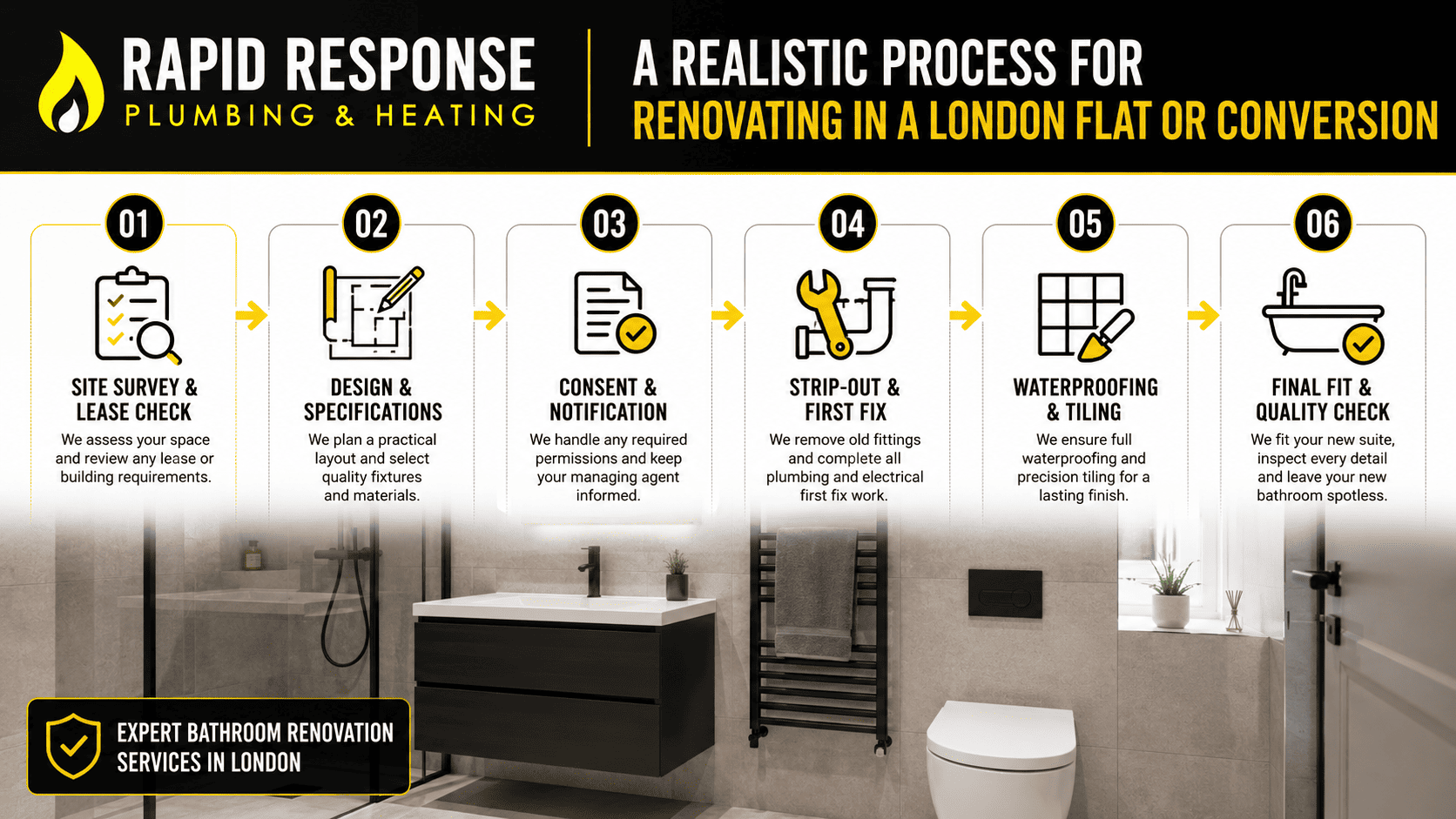
A Realistic Process for Renovating in a London Flat or Conversion
- Site survey and lease check. Confirms what work is straightforward and what may benefit from a quick conversation with your freeholder or managing agent.
- Design and specifications. Layout planned around existing pipe routes where practical, to keep the project efficient and cost-effective.
- Consent and notification. Any helpful notifications are sent early, with time built into the schedule.
- Strip-out and first fix. Old fixtures removed, plumbing and electrics updated to current regulations.
- Waterproofing and tiling. Particularly important in flats, where a poorly sealed shower tray or membrane could affect the flat below.
- Second, fix and finish. Fixtures, lighting, and ventilation installed and tested.
- Compliance certification. Relevant certificates issued and kept for your records, useful when you come to sell.
A well-run renovation in a converted property typically takes 10 to 15 working days for a full refit, sometimes slightly longer if pipework needs replacing, or a consent check is in progress.
Choosing a Bathroom Fitter Who Understands London Buildings
When comparing london bathroom installations specialists, these questions can be just as useful as comparing price:
- Have you worked on leasehold flats and converted period properties before, and can you describe a similar job?
- How do you usually handle situations involving shared pipework?
- Are your engineers registered under the relevant competent person schemes, and can I see proof?
- What waterproofing system do you use under tiled floors and shower areas, and is it guaranteed?
- How do you manage access to neighbours and communal areas during work?
A company that answers these confidently, without needing to be prompted, is generally a good sign of genuine experience with London properties.
If you’d like a full breakdown of what a complete refit involves, our team has put together a detailed overview on our bathroom installation London service page, and you can browse more renovation insights on our bathroom blog.
Get Expert Advice Before You Commit
Renovating a bathroom in a London flat or period conversion is as much about understanding the building as it is about design. Taking a little time upfront to understand your lease, your pipework, and your building’s history help the whole project run more smoothly from day one.
Ready to start your project the right way?
Visit www.rapidheat247.co.uk to see our full range of bathroom renovation services London homeowners rely on or call our team directly on 07888078885 to arrange a free site survey and talk through your layout, your building type, and your timeline before you book any work.
Frequently Asked Questions
Cosmetic updates like new tiles or fixtures usually don’t raise any issues. Moving a toilet, bath, or shower, or anything affecting shared pipework, is more likely to need a quick check with your lease or managing agent. It’s always best to confirm the specifics of your own lease.
A full renovation generally takes 10 to 15 working days. Converted properties with older or shared pipework can take slightly longer if pipe replacement or a consent check is needed before work begins.
It can, particularly where waste pipes or structural elements are shared. This is why waterproofing standards and pipework routing matter so much in London renovations, since a poorly sealed area could affect the property below.
Look for registration under the relevant competent person schemes covering electrical and plumbing work. Keep any certificates issued, as they’re often requested by solicitors when you sell the property.
Costs vary depending on the scope of work, pipework condition, and fixtures chosen, typically ranging from a few thousand pounds for a refresh to significantly more for a full structural refit involving pipework replacement. A site survey gives the most accurate figure for your specific property.
Rapid Response Plumbing & Heating provides experienced bathroom fitters London homeowners trust for both straightforward refits and more involved conversions involving shared pipework. Call 07888078885 or visit www.rapidheat247.co.uk for a free, no-obligation survey.